Quality bands
Distribution of message quality
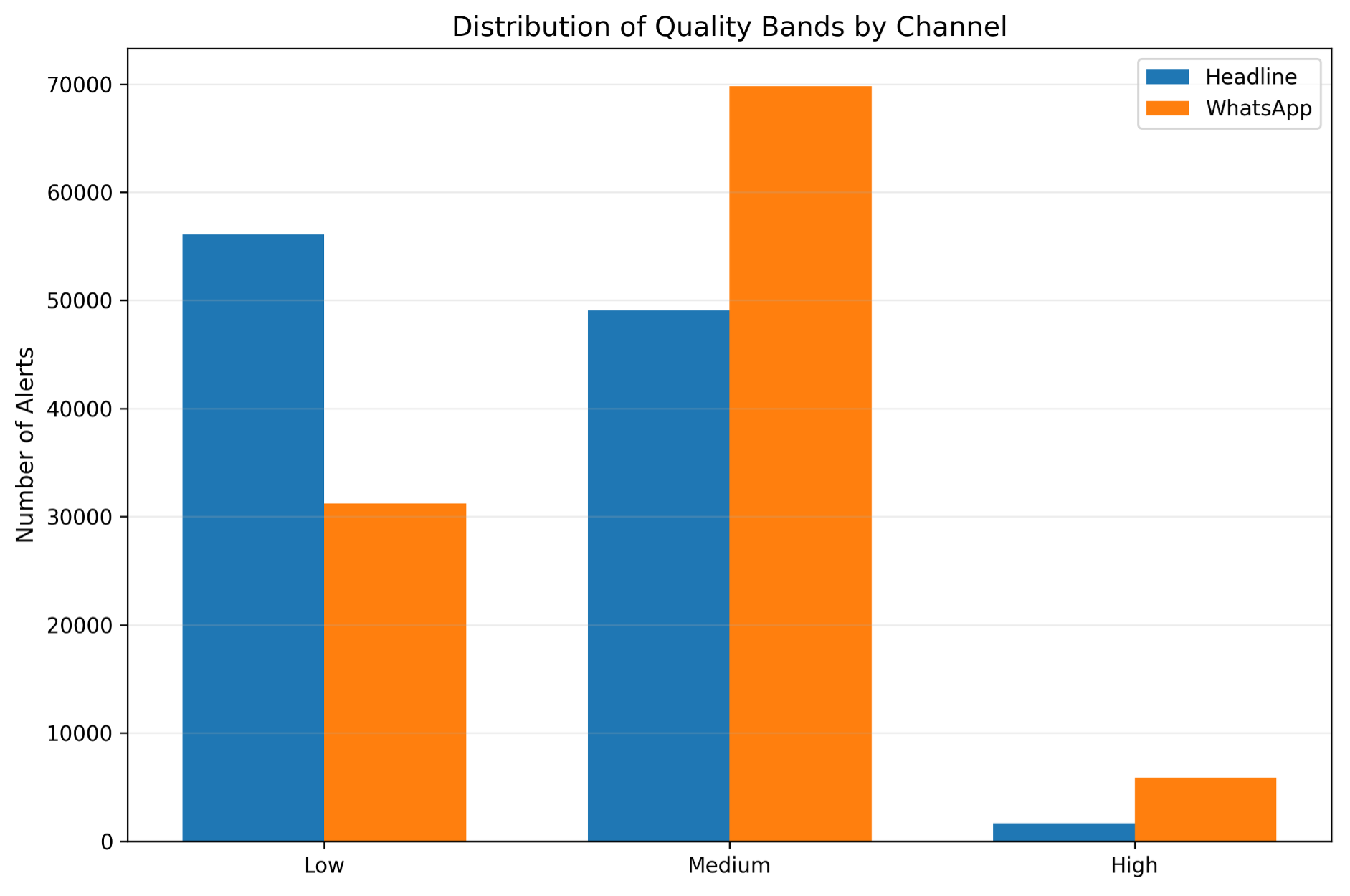
The majority of alerts fall within the medium quality band, indicating that many messages contain partial but incomplete information needed for effective risk communication.
A large-scale examination of warning message quality in Brazil’s public alert system, focusing on communicational structure, channel differences, and operational implications for public understanding and response.
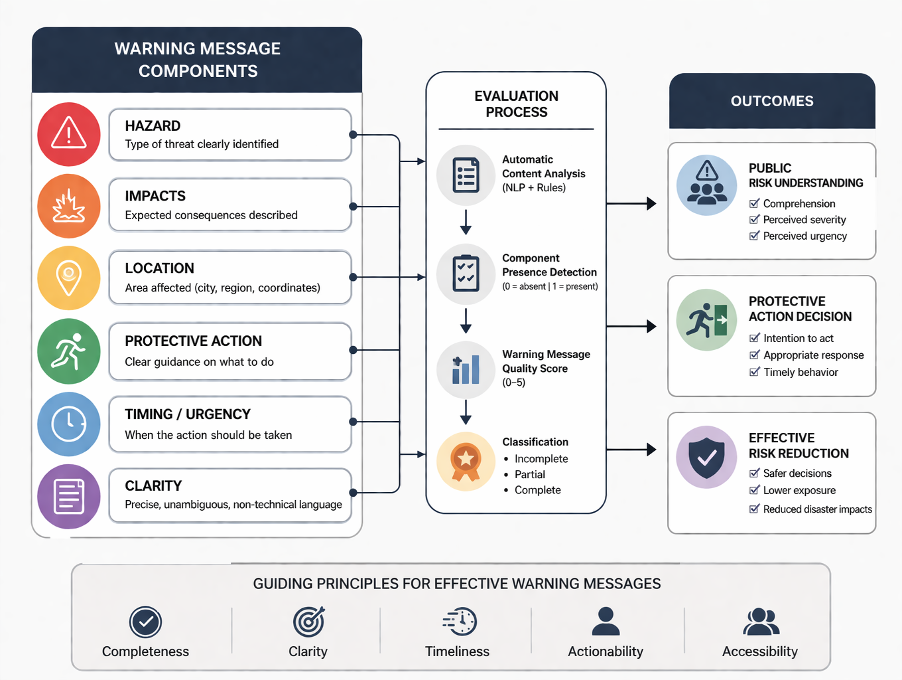
Effective warning messages must convey essential information that enables individuals to understand a threat and take protective action. The analytical framework used in this study evaluates six communicational components frequently recommended in risk communication research: hazard identification, impact description, geographic location, protective action guidance, timing or urgency, and message clarity.
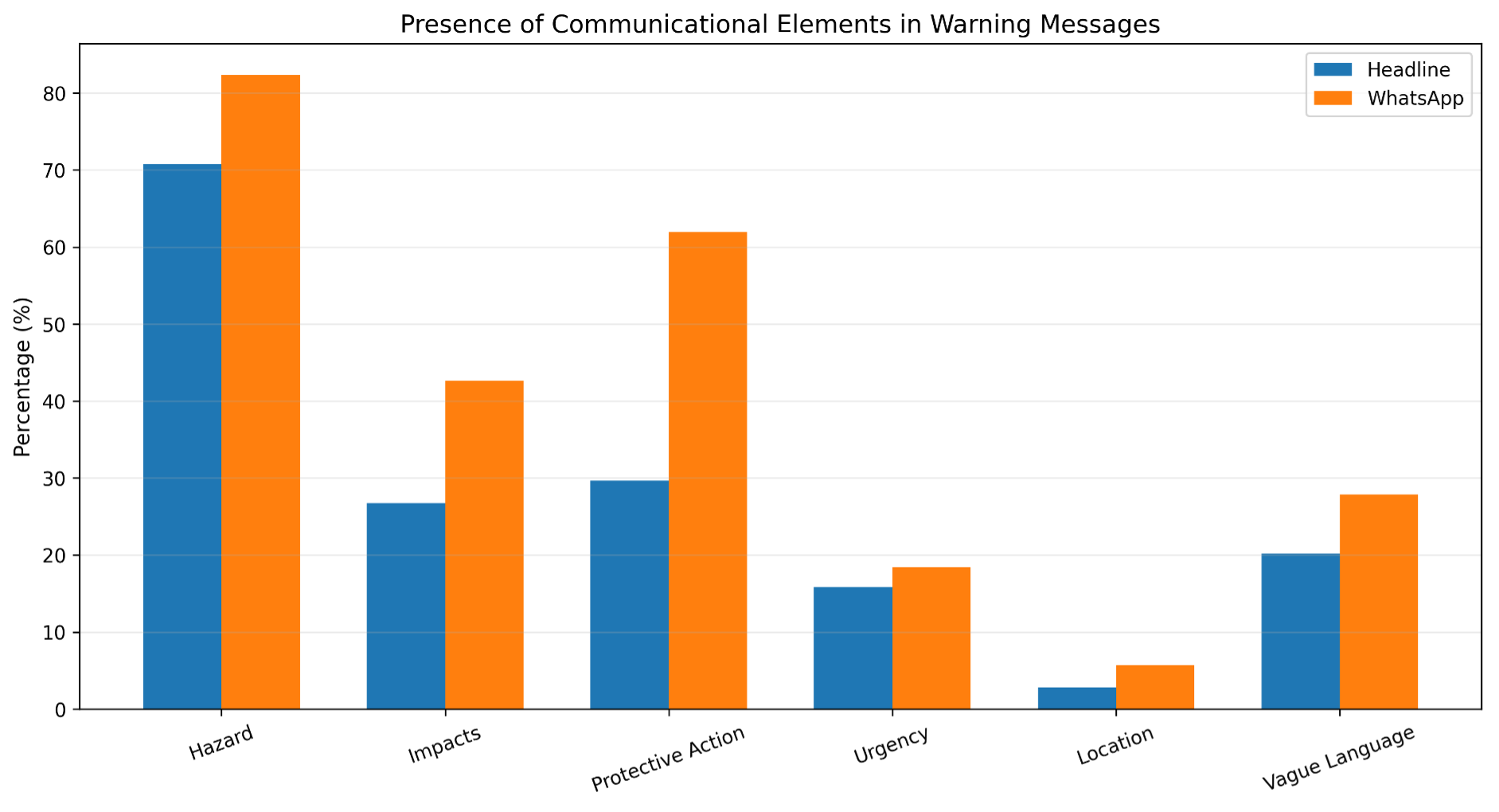
The analysis shows substantial variation in the presence of communicational elements across warning messages. While hazard identification appears in the majority of alerts, critical elements such as impact description and explicit urgency are much less frequent. Guidance on protective action appears more often in WhatsApp messages than in headline alerts, reflecting differences in message length and channel affordances.
The study also evaluates quality bands, message length, and structural differences between channels.
The majority of alerts fall within the medium quality band, indicating that many messages contain partial but incomplete information needed for effective risk communication.
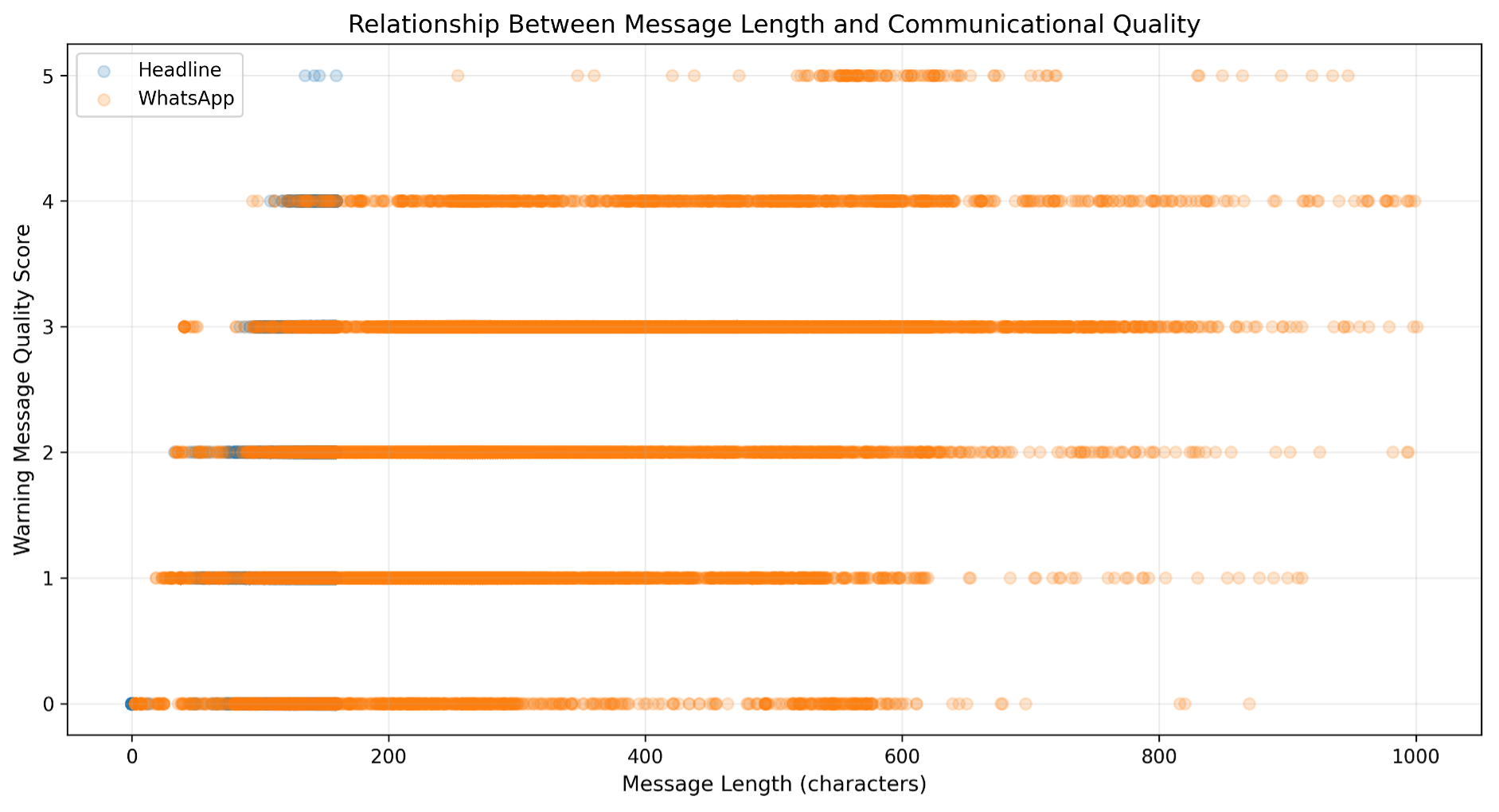
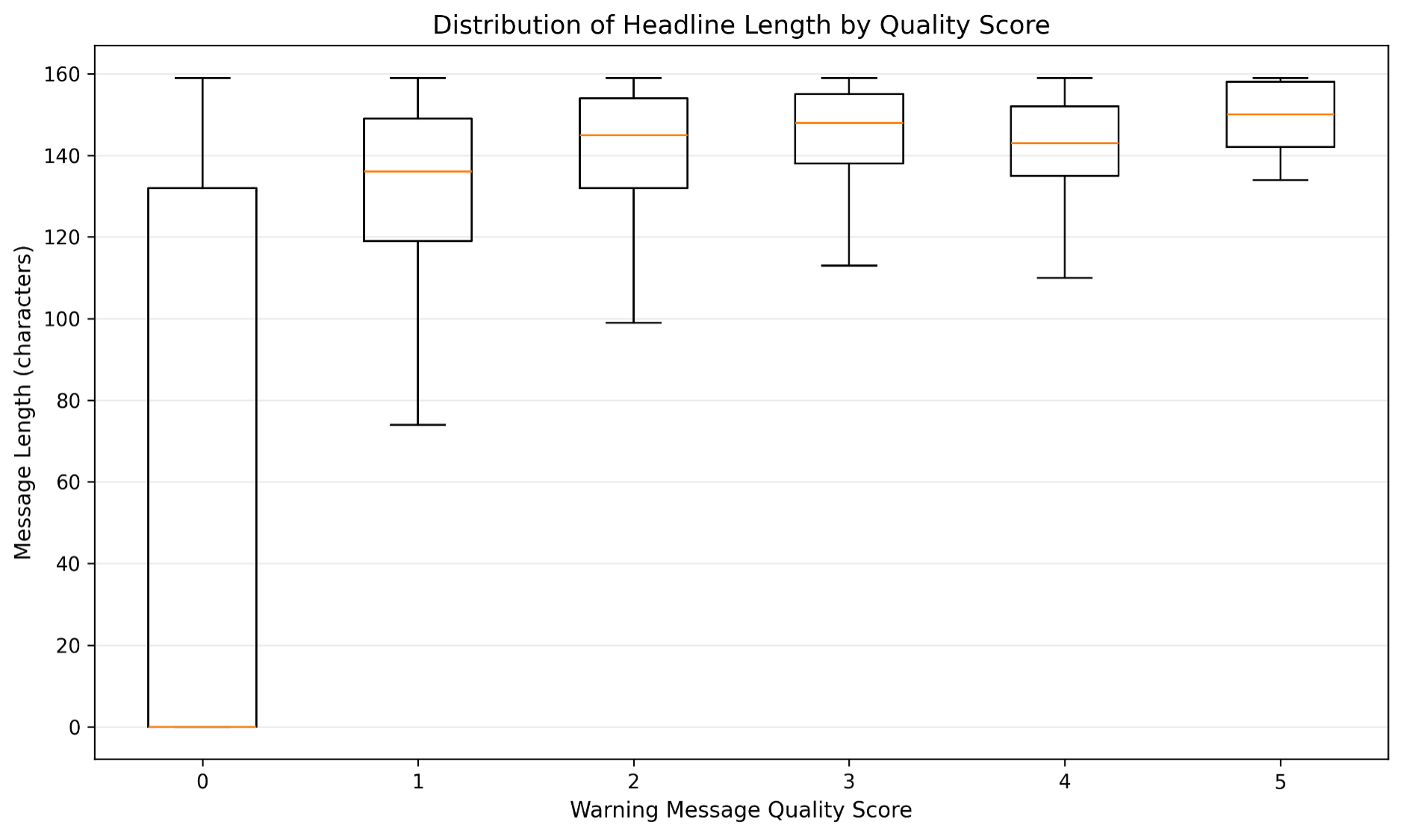
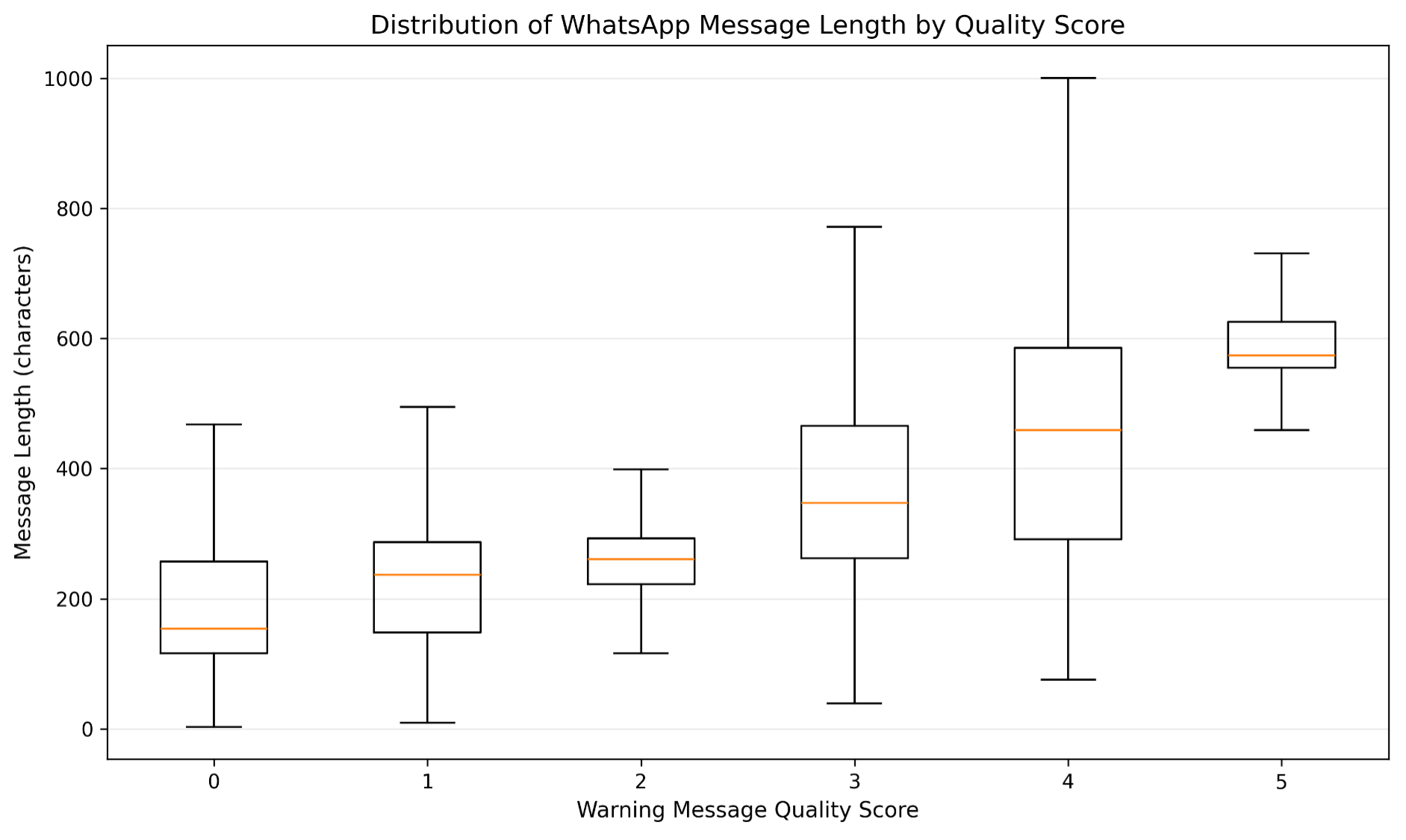
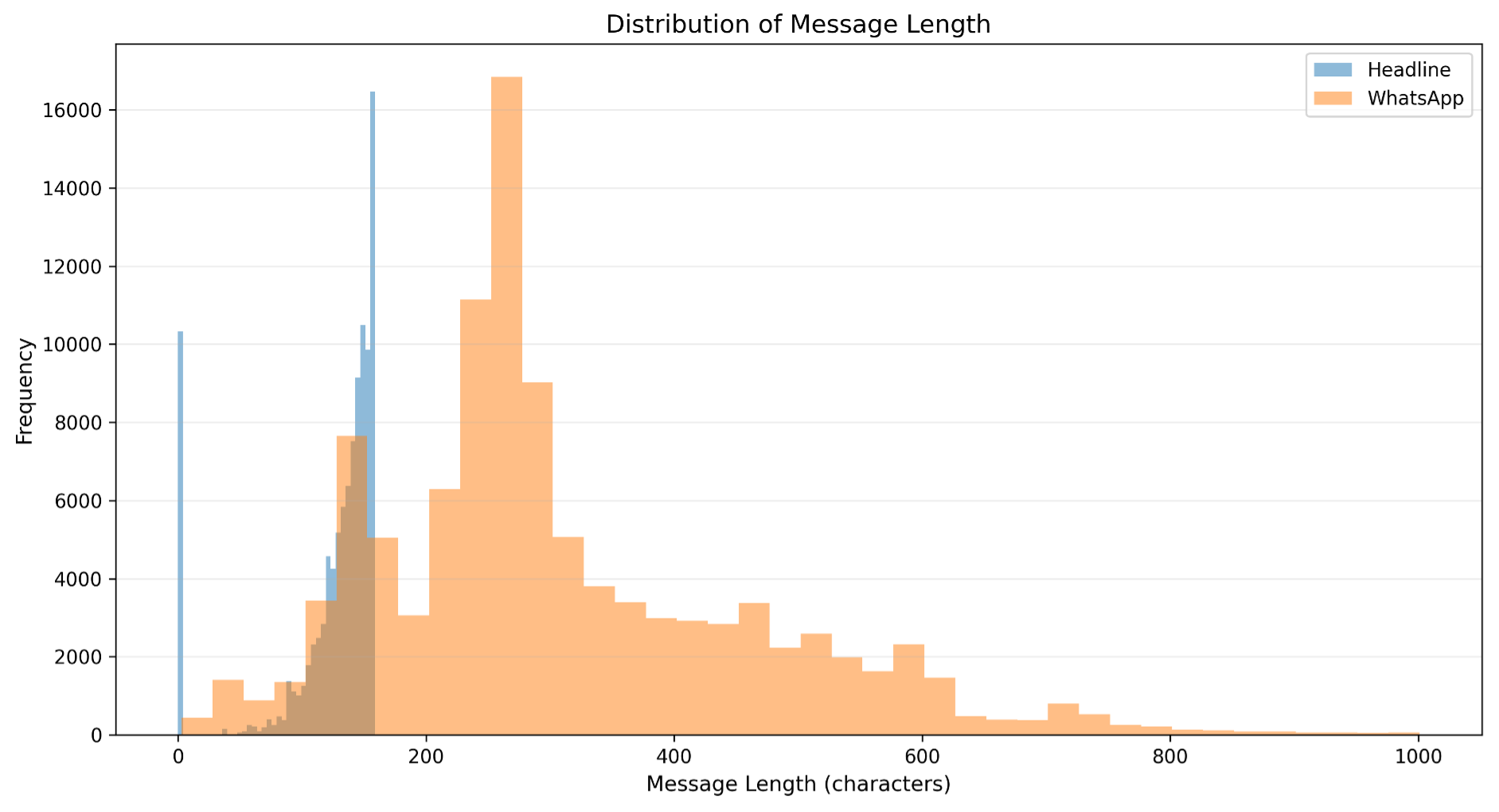
Short headline alerts tend to contain limited contextual information, while longer digital messages provide greater opportunity for detailed guidance and explanation.
Headlines cluster around short character limits, while WhatsApp messages show much broader variation and higher potential for communicational completeness.
The findings highlight important operational considerations for public warning systems. Alert dissemination technologies alone do not guarantee effective risk communication. Message design and content quality play a critical role in enabling individuals to correctly interpret warnings and take appropriate protective action.
Improving warning message effectiveness requires institutional guidance, operator training, and standardized templates that ensure the consistent inclusion of key communicational elements.